5 Reasons Group Support Might Be Your Next Right Step in Healing from Betrayal Trauma
Jun 30, 2026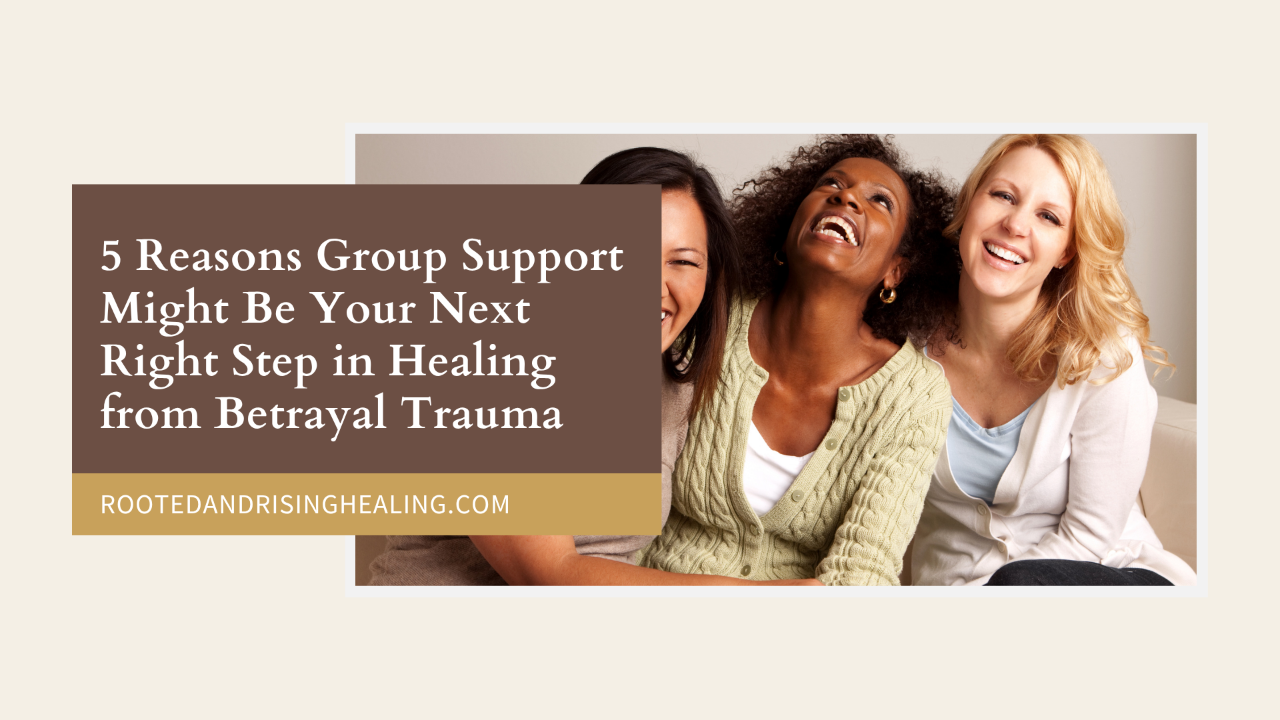
There’s a moment in every healing journey where you wonder if it’s time to let someone else in.
Maybe you’ve been holding it all together for your kids. For your spouse. For your reputation.
Maybe you’ve tried reading books, listening to podcasts, or even meeting with a coach or therapist—but something still feels stuck.
Maybe you’re afraid. Of being judged. Of falling apart. Of hearing someone else’s pain and not knowing how to carry your own.
That’s okay. It makes sense.
But what if your next right step isn’t doing more alone?
What if it’s letting yourself be witnessed—gently, safely, in the presence of women who understand betrayal not just in theory, but in their bones?
Here are 5 reasons group support might be exactly what your healing journey needs right now.
1. Because Isolation Is a Liar
After betrayal, shame convinces you you’re alone. That no one could possibly understand the devastation you’re carrying.
That something must be wrong with you for hurting so much—or for still being with him, or for having no idea what to do next.
But when you step into a group of women who know this road, that lie starts to crumble.
You hear someone else name your feelings. You see tears in another woman’s eyes when you speak. And suddenly… you’re not alone anymore.
2. Because You Deserve to Feel Safe Again
Betrayal trauma doesn’t just shatter your trust in others—it disrupts your nervous system. You may flinch at certain tones. Freeze in conflict. Over-function. Shut down.
Healing and emotional safety start when you experience safe, consistent connection—with no strings attached.
A trauma-informed support group offers exactly that: a space where you don’t have to perform or protect. Just breathe. Just be.
3. Because Being Witnessed Is Healing
There’s something sacred about being truly seen in your pain—and still accepted.
In a well-facilitated group, you’re not given pat answers or told to hurry up and heal. You’re offered presence. Validation. Resonance.
Sometimes healing doesn’t begin with a solution. It begins with someone else saying, “Me too.”
4. Because You Need More Than Information—You Need Connection
You may already know what boundaries are. You might understand trauma and attachment and nervous system regulation.
But knowledge doesn’t always translate into transformation without a relationship.
Group support connects the dots between what you know and how you live.
It gives you a place to practice using your voice. To hear yourself think out loud. To see your story reflected in others and realize you’re stronger—and not as alone—as you thought.
5. Because This Might Be Where You Meet Your People
Some women enter a support group reluctantly—convinced they’ll never fit in.
But time and again, I’ve seen those same women walk away saying: “Where have these women been all my life?”
The friendships formed in these circles are often life-giving and long-lasting. They become the safe harbor you turn to on hard days—and the cheerleaders who remind you you’re not too much and not too broken.
They become your people during betrayal trauma recovery.
You Don’t Have to Heal Alone
If you’re standing at the edge, unsure whether to step into a support group, I want you to know this:
It’s okay to feel scared. It’s okay not to know what to say. It’s okay to just show up.
The women in these groups aren’t looking for polished. They’re showing up messy and real—just like you.
And what you’ll often find is that the very thing you feared… becomes the thing that sets you free.
Because healing and betrayal recovery is personal. But it doesn’t have to be private.